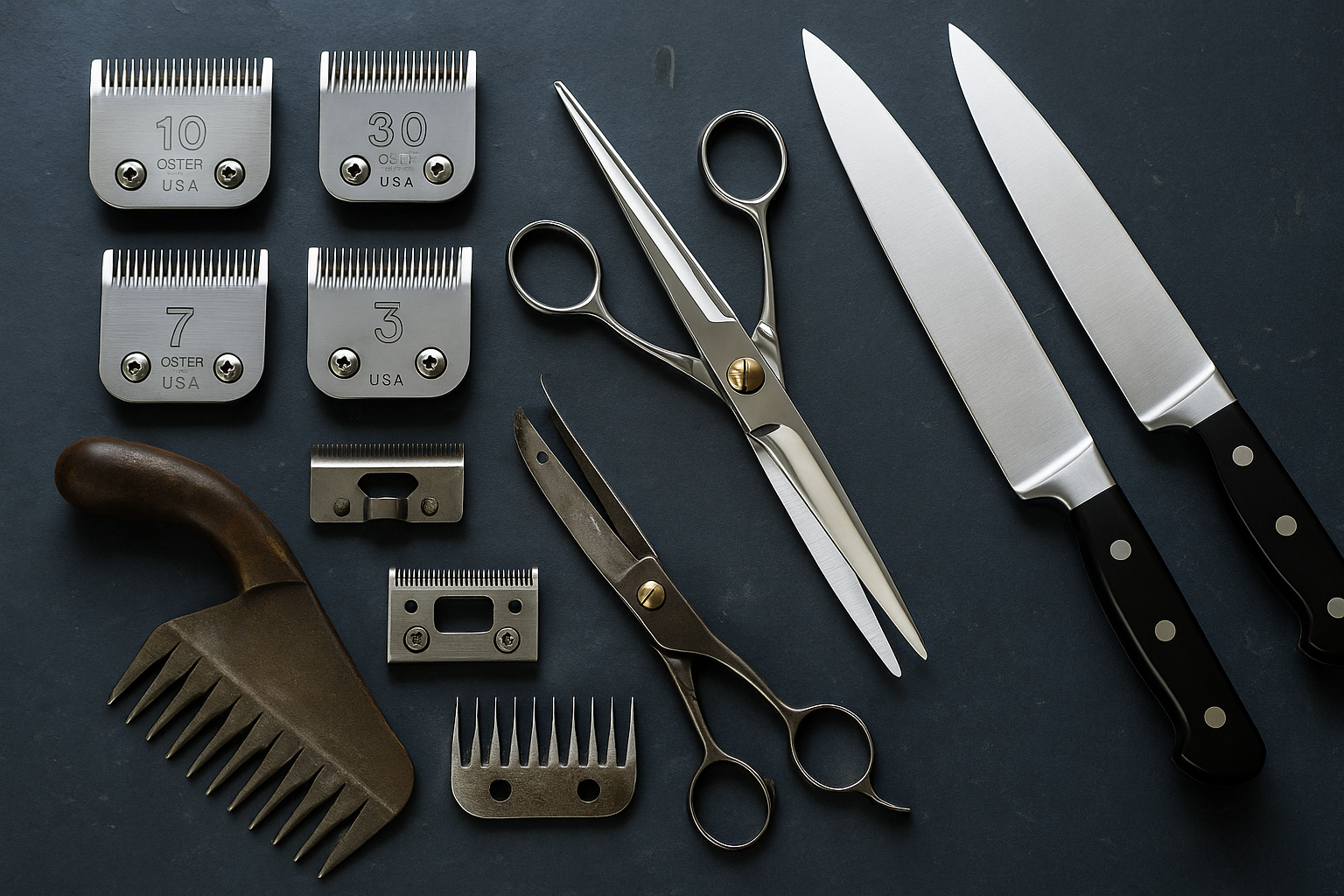
"Should I sharpen this or replace it?" is the question we get every week from groomers and barbers across Australia. Most blades absolutely deserve a sharpen. Some are genuinely past their useful life. Here is how to tell the difference, save money on the ones worth restoring, and avoid wasting money on the ones that are not.
The simple test
Before anything else, run this 30-second check. If your blade fails this test, it is not necessarily dead. It just needs sharpening.
- Disassemble the blade and clean it thoroughly (build-up dulls cutting performance even on a sharp blade)
- Oil and reassemble
- Try cutting again on a clean dog or coat
If cutting is back to normal, you were dealing with build-up, not dullness. If the blade still pulls, drags, or runs hot after a thorough clean and oil, then sharpening is the next step.
Signs a blade should be sharpened (not replaced)
Most blades coming off the bench at full-time professional volume just need a sharpen. The blade is structurally fine, the steel is fine, the cutter and comb are intact, but the cutting edge has worn. Sharpening removes the worn metal, re-establishes the factory edge angle, and restores cutting performance.
Send it for sharpening if:
- The blade pulls hair but cuts cleanly when oiled and clean
- The cut quality has degraded but the blade is intact (no missing teeth, no major chips)
- The blade gets hot quickly but everything else is fine
- It has been more than 4 weeks of full-time use since the last sharpen
- The blade was working fine 6 months ago and gradually got worse
Most professional blades can be sharpened 30 to 50 times across their working life without measurable shortening. A premium Andis or Wahl blade in regular sharpening rotation should last 5 to 10 years of full-time work.
Signs a blade should be replaced
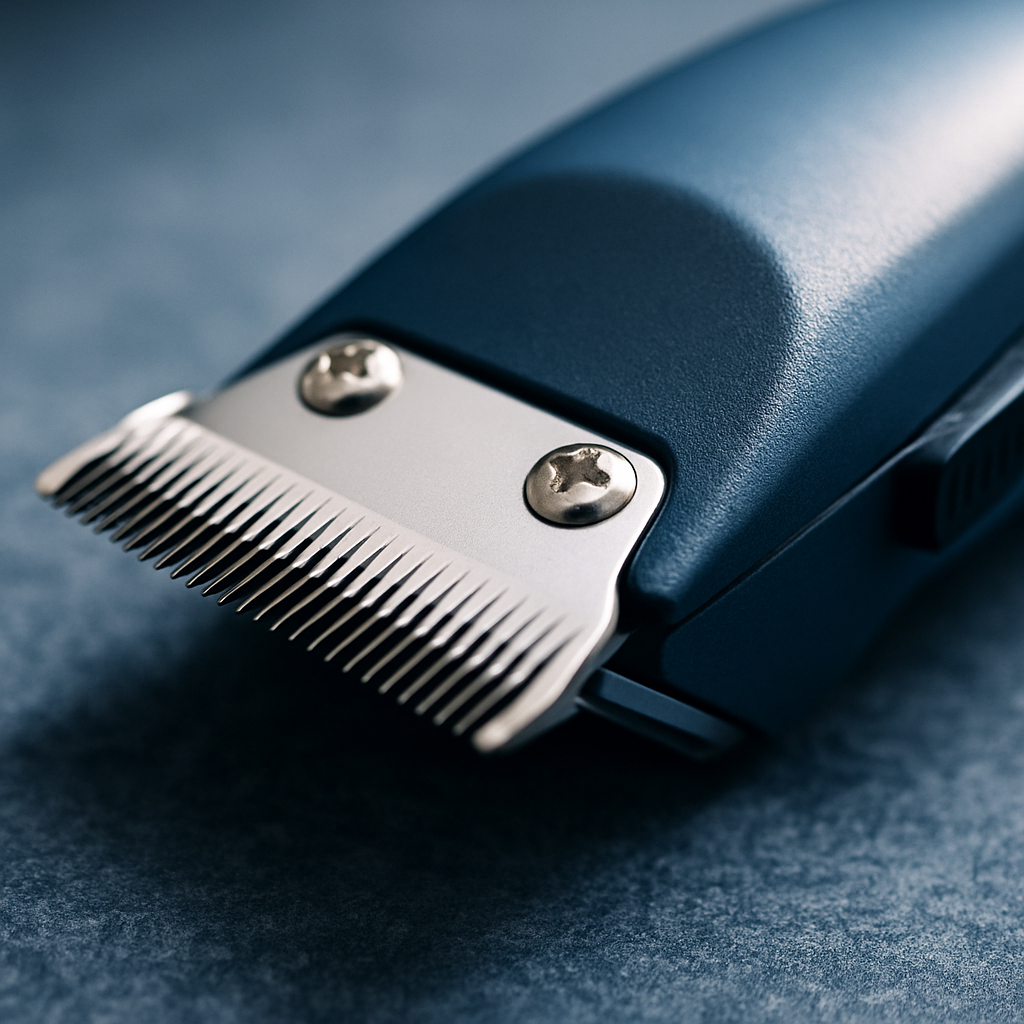
Some blades genuinely cannot be restored. Sharpening will not fix the problem because the problem is structural, not edge wear.
Replace if any of these are true:
- Missing or broken teeth. Even one missing tooth on a finish blade leaves a permanent cutting line. We can grind the rest of the blade level with the missing tooth, but it shortens the blade significantly. After two passes through this kind of repair, the blade is too short to use safely.
- Visible warp or twist. If the cutter or comb is bent, even slightly, it will not cut evenly no matter how sharp the edge is. This usually happens from drops or running over hard objects.
- Severe rust pitting on the cutting surface. Surface rust we can grind out. Pitting goes deeper into the steel and creates rough cutting that does not improve with sharpening.
- Cutter and comb worn unevenly. If you can see daylight through the gap when the cutter is at one extreme of its travel, the blade no longer makes proper contact and will not cut cleanly.
- The blade has been sharpened 30+ times. Eventually the cutting surface gets too thin to hold an edge. You will see the steel start to look discoloured (heat-affected) faster than it used to. This is the rare end-of-life signal.
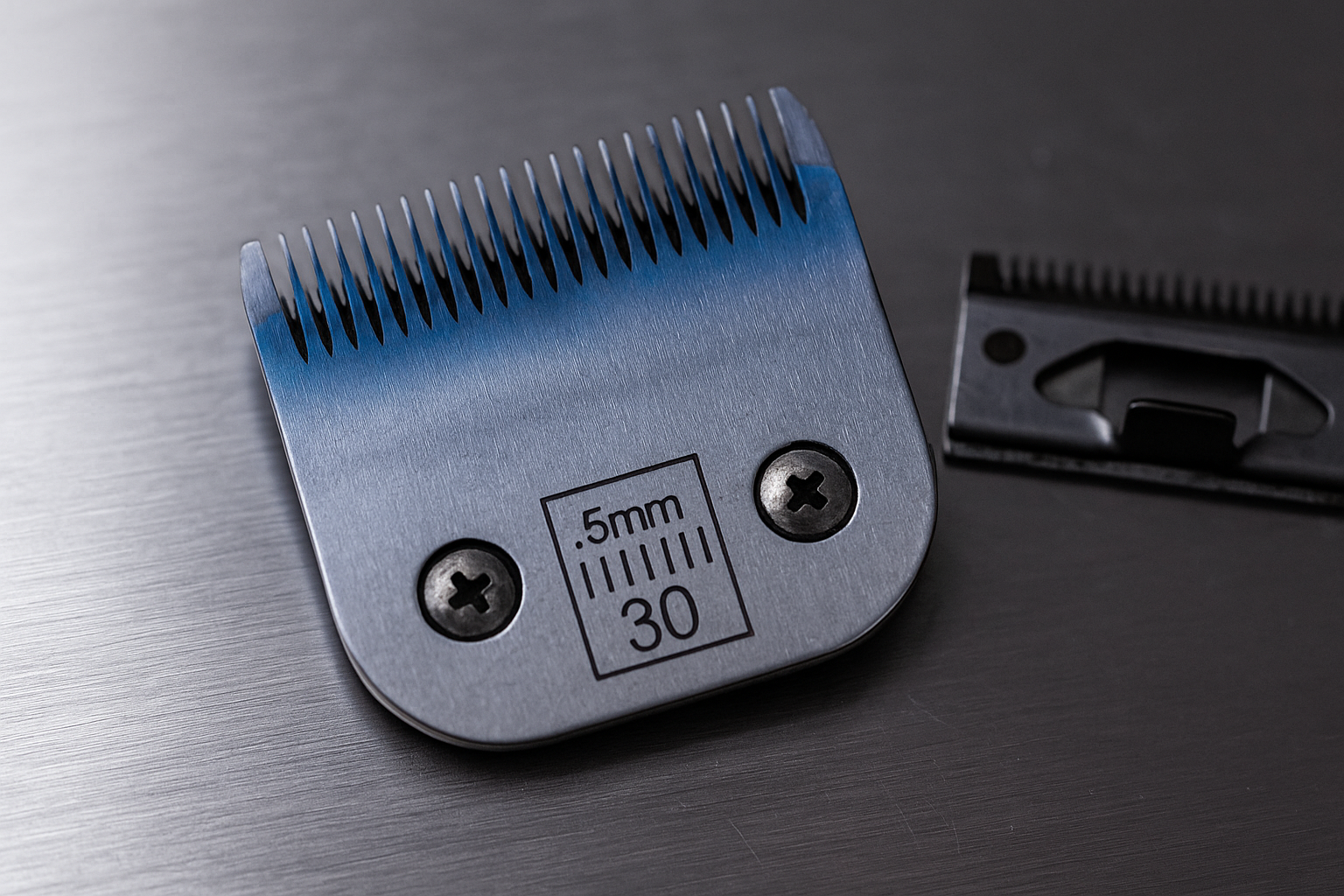
- Heat damage from amateur sharpening. If a previous sharpener overheated the blade on a flat wheel, the steel itself is annealed and will not hold an edge regardless of how it is re-ground. You can usually see this as discoloured (blue or straw-coloured) zones along the cutting edge.
The grey zone: chipped blades
Chips are where most owners get the decision wrong. Small chips (less than 0.5mm) are removed during a standard sharpen at no extra cost. The cutting edge is ground down past the chip and the blade is restored.
Medium chips (0.5mm to 1.5mm) cost extra to remove because they require deeper grinding, but the blade is usually still worth restoring. Expect $20 to $40 on top of the standard sharpen.
Large chips (over 1.5mm) or chips that take a tooth means the blade is at the edge of repairability. We will quote before doing the work. Sometimes it is worth restoring a premium blade. Sometimes a $25 sharpen on a $70 blade is uneconomic compared to a $90 replacement that lasts 5 years.
Send a photo through the contact form if you have a chipped blade and we will give you a straight assessment before you commit to anything.
Ceramic blades are different
Ceramic blades (Andis CeramicEdge, etc.) cannot be reliably re-sharpened. The ceramic material is harder than the abrasives used in standard sharpening, so the geometry cannot be re-established without specialist equipment that very few sharpeners run.
Most ceramic blades are designed to be replaced rather than sharpened. The trade-off is that ceramic runs cooler and holds an edge slightly longer than steel, but when it goes, it goes. Budget accordingly.
Steel blades, including all standard A5 detachable, 5-in-1 adjustables, T-blades, and barber outliners, are all sharpenable on the right equipment.
Sharpening costs roughly a quarter to a third of the cost of replacement. Most blades can be sharpened many times. Sharpen first, replace as a last resort.
Cost calculation
Here is the simple maths for whether a sharpen is worth it:
- Sharpening a clipper blade in Australia in 2026: $18 to $25 per standard blade depending on quantity
- Replacing a Wahl A5 #10 blade: $55 to $75
- Replacing an Andis UltraEdge #10 blade: $50 to $65
Sharpening costs roughly a quarter to a third of the cost of replacement. Most blades can be sharpened many times over their life. Unless the blade has structural damage from the list above, sharpen first, replace as a last resort.
The lifecycle of a working blade
Most professional A5 blades follow this lifecycle:
- Years 0 to 1: Factory edge. Sharpen at 4 to 8 week intervals.
- Years 1 to 4: Sharpen every 4 to 8 weeks. Edge restores to near-factory each time.
- Years 4 to 7: Sharpen continues to work but cutting feels slightly less crisp than new. The blade has lost some cutting surface but is still fully usable.
- Years 7+: Eventually the cutting surface is too thin to hold an edge. Replace.
Outside of accidents (drops, missing teeth, rust), the only thing that ends the working life of a professional blade is years of regular sharpening eventually wearing the steel too thin. That happens after a long career, not after a few months.
The bottom line
If your blade is intact and dull, sharpen it. If your blade has missing teeth, twist, deep pitting, or heat damage, replace it. If you are not sure, send a photo and we will tell you straight.
Our clipper blade sharpening service handles all major brands from $18 per standard blade with 5-7 day workshop turnaround. If your blade arrives and we determine it is not worth restoring, we will tell you before doing any work and refund the sharpening fee. No-one benefits from sharpening a blade that should be replaced.
For instant pricing, place an order online. For a chip or damage assessment first, send us a message with a photo.