One of the most common questions we get from pet groomers and barbers across Australia is "how often should I sharpen my clipper blades?" The honest answer is: it depends. But after 30 years on the bench, we have a much more useful framework than that.
This guide gives you sharpening intervals by professional type, the warning signs that mean your blade is overdue, the daily habits that double blade life, and the cost of waiting too long.
The short answer by professional type
Here are realistic intervals for full-time professional use in Australia in 2026:
- Pet groomers, busy salon: every 4 to 6 weeks per heavily used blade
- Pet groomers, mobile or quieter studio: every 6 to 10 weeks
- Barbers, fade work daily: every 2 to 4 weeks for fade blades, 4 to 8 weeks for detail blades
- Hairdressers using clippers: every 6 to 12 weeks
- Shearing contractors, in-season: combs and cutters touched up between every couple of sheep, full sharpens every 50-100 sheep
- Home users on a single dog: every 6 to 12 months
These are starting points. The right interval for you is the longest you can go before the blade starts pulling or running hot. The wrong interval is the day after you noticed it was getting blunt.
What actually wears a blade out
Several factors determine how quickly your blades dull, and most of them are within your control:
Volume of work
A blade doing 8 dogs a day in a busy Sydney grooming salon will dull faster than the same blade doing 2 dogs a day in a quiet country town. That part is obvious. What's less obvious: the same total dog count produces different wear depending on how each individual groom is handled. Five quick body clips in a morning is gentler than one matted-coat rescue dog where the blade has to break through chunks of clumped fur.
Coat type and condition
Doodle hybrids (cavoodle, groodle, labradoodle) are notoriously hard on blades because their dense, often matted coats trap dirt and create maximum friction. Working dogs that come in dusty from the paddock are second hardest. Short-coated breeds (staffies, kelpies) and clean professionally-bathed dogs are easiest.
For barbers, the equivalent is hair density and product residue. A client with thick Mediterranean hair and yesterday's pomade will dull a Wahl Magic Clip noticeably faster than fine, clean hair on a fresh wash.
Cleaning and oiling
This is the single biggest variable you control. A blade that gets brushed, washed, and oiled after every cut lasts roughly twice as long between sharpenings as one that gets oiled occasionally and cleaned weekly. We see this clearly on the bench: a blade returning every 8 weeks from a meticulous groomer comes back with even, predictable wear. The same blade from a less-careful groomer comes back with corrosion, build-up, and uneven dulling that takes more material to restore.
Blade quality and steel
Premium blades hold their edge longer, but the gap is smaller than the marketing suggests. A Wahl A5 #10 holds its edge slightly less long than an Andis UltraEdge #10, which holds slightly less long than an Andis CeramicEdge. The difference might be 2 to 3 weeks of full-time use. Useful, but not transformative. Care matters more than brand. See our Andis vs Wahl comparison for the full breakdown.
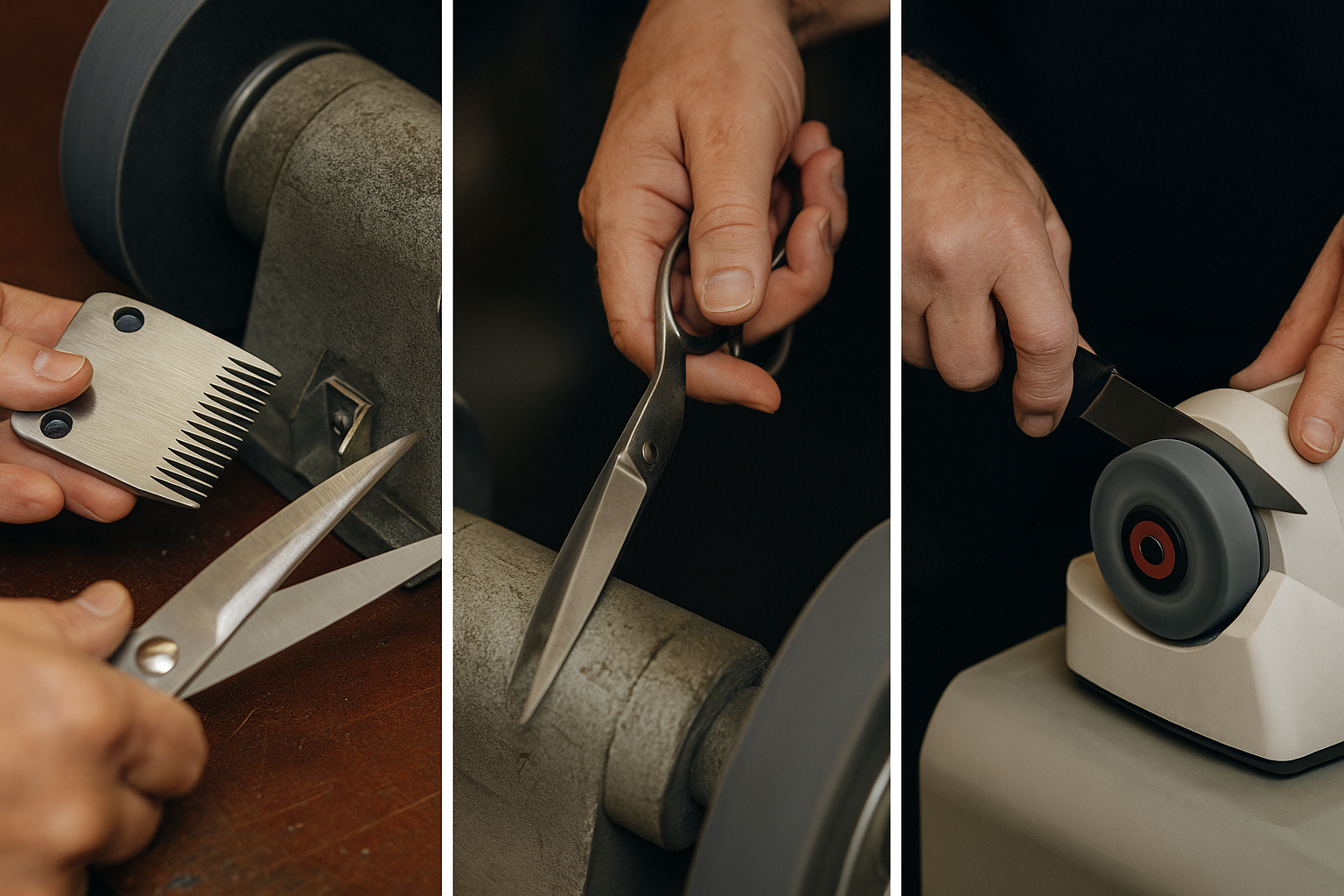
Care matters more than brand. A meticulously oiled budget blade outlasts a neglected premium one every time.
The 7 signs your blade needs sharpening
The earlier you spot these, the easier the restoration:
- Pulling instead of cutting. The blade catches hair and tugs before slicing it. Most groomers feel this through the dog flinching before they consciously notice. If a dog suddenly stops sitting still, check the blade.
- Multiple passes for one cut. What used to take one stroke now needs two or three. Easy to ignore because you adapt unconsciously, then suddenly notice you're working much longer per dog.
- Heat building fast. A sharp, oiled blade should run cool for 20 to 40 minutes of continuous cutting. If it's too hot to touch within 5 minutes, the cutting friction is excessive. See our guide on overheating clippers for the full diagnostic.
- Uneven cut or visible lines. The blade isn't making consistent contact along its length. Sometimes a tooth has chipped. Sometimes the cutter is worn unevenly. Either way, it's sharpener territory.
- The motor sounds different. Higher-pitched whine or noticeable struggle through coat. The clipper is working harder to compensate for a duller blade.
- The pet flinches or pulls away. This is the early warning. Sharp blades feel like a tickle. Dull blades feel like having hair plucked. Pet behaviour changes well before you consciously notice the cut quality dropping.
- You're getting hand fatigue. A sharp, oiled blade glides through coat. A dull blade requires you to push and steer it. After a day of pushing dull blades, your wrists will tell you.
The cost of waiting too long
A blade that just needs a sharpen costs from $18 in our workshop and comes back to factory edge in 5 to 7 days. The same blade run into the ground for another 4 weeks of "she'll be right" usually develops one of three problems:
- Heat damage from continuous overheating, which can anneal the cutting surface and ruin the steel temper. Once that happens, sharpening cannot restore the edge.
- Tooth chipping from forcing through coat the blade can no longer cut cleanly.
- Excessive metal loss because we have to grind down to clean steel, shortening the blade's working life.
The cheap version of clipper blade maintenance is regular sharpening at the right interval. The expensive version is replacing blades you ran into the ground. See our full guide on when to sharpen vs replace.
The 30-second daily routine that doubles blade life
If you do nothing else, do this:
- Brush hair off the blade with a stiff brush or compressed air
- Spray with blade wash, run the clipper for 5 seconds, wipe
- Apply 3 to 5 drops of clipper oil along the cutting edge
- Run the clipper briefly to distribute
That's 30 seconds at the end of every day, on every blade you used. It will roughly double the working life between sharpenings.
The weekly deep clean
Once a week, take it further:
- Disassemble each blade. Remove the cutter from the comb.
- Clean both surfaces with blade wash
- Dry thoroughly
- Inspect for chips, corrosion, or tooth damage
- Re-oil and reassemble
- Check tension on adjustable blades
Building a sharpening rotation
Most working professionals run a rotation system rather than waiting for blades to fail. Three approaches that work well:
The two-set rotation: Buy two of every blade you use most. While one is being sharpened, the other is in use. Send the dull one in the day you switch.
The fortnight batch: Send all your dull blades in once a fortnight. Always have most of your kit working, never run a single blade past its prime.
The end-of-month batch: Same idea, monthly. Suits quieter studios and home users. Standard blades are volume-priced, so the more you send the lower the per-blade rate (down to $18 each at 10+), with the same 5-7 day turnaround.
How long will a professional blade last?
With regular sharpening (not running them into the ground), a quality A5 detachable blade typically lasts 5 to 10 years of full-time professional use. A premium ceramic-coated steel blade in the upper range. A budget blade in the lower range. We routinely sharpen blades that are 7+ years old and still cutting well.
The end-of-life signal isn't dramatic. The cutting surface gradually gets too thin to hold a fresh edge. The blade comes back from sharpening with less of a noticeable improvement than it used to. At that point, replace it. Until then, keep sharpening.
The bottom line
Every 4 to 8 weeks for professional groomers. Every 2 to 4 weeks for full-time barbers on fade work. Earlier if you notice pulling, heat, or pet flinching. The single best thing you can do between sharpenings is brush, wash, and oil after every cut.
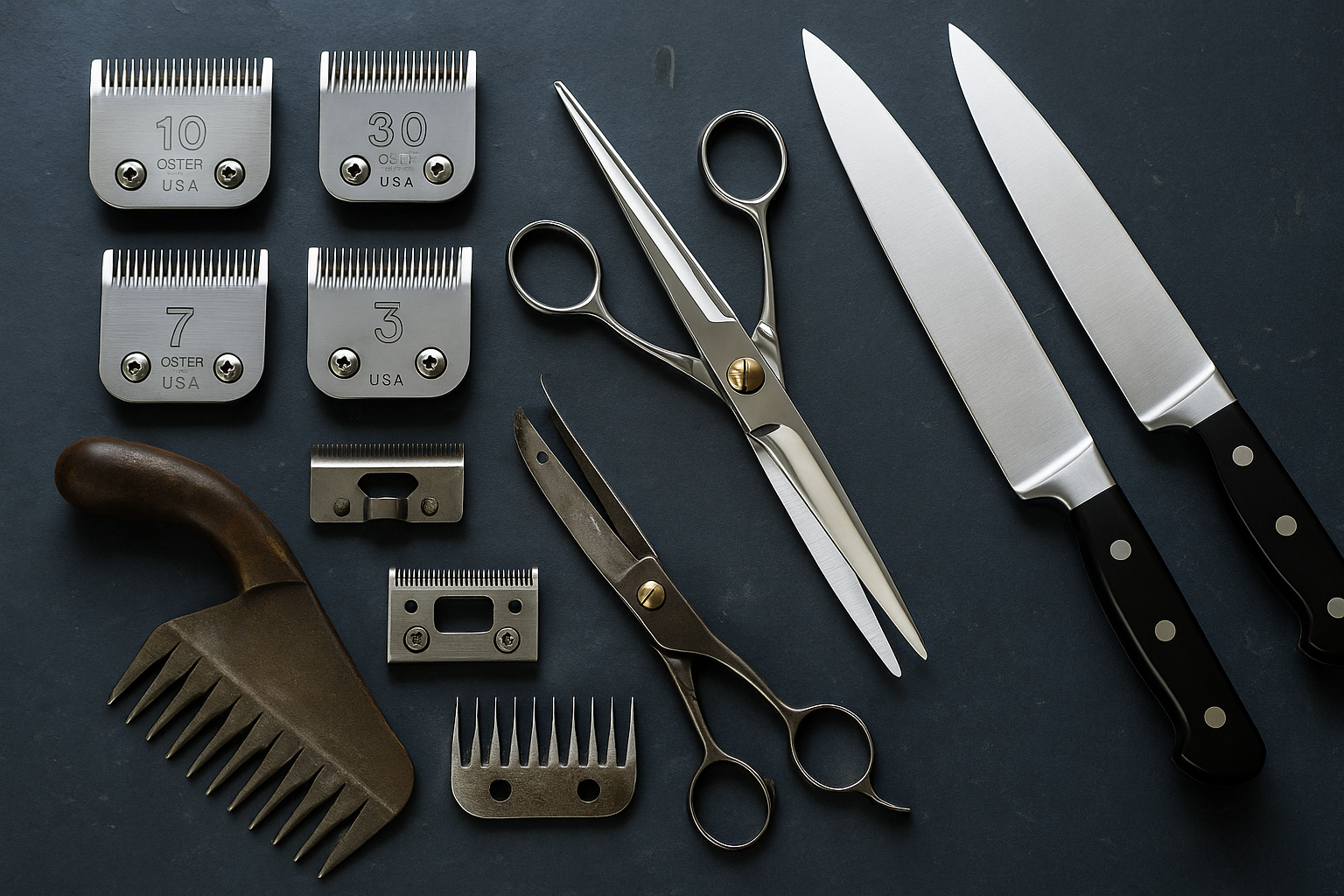
When your blades are due, send them to us. Our clipper blade sharpening service handles all major brands from $18 per blade. We sharpen Wahl, Andis, Oster, Heiniger, and most other Australian-available brands at 5-7 day workshop turnaround.
For instant pricing, place an order online. Or send us a photo through the contact form if you're not sure whether your blade needs sharpening or replacing.