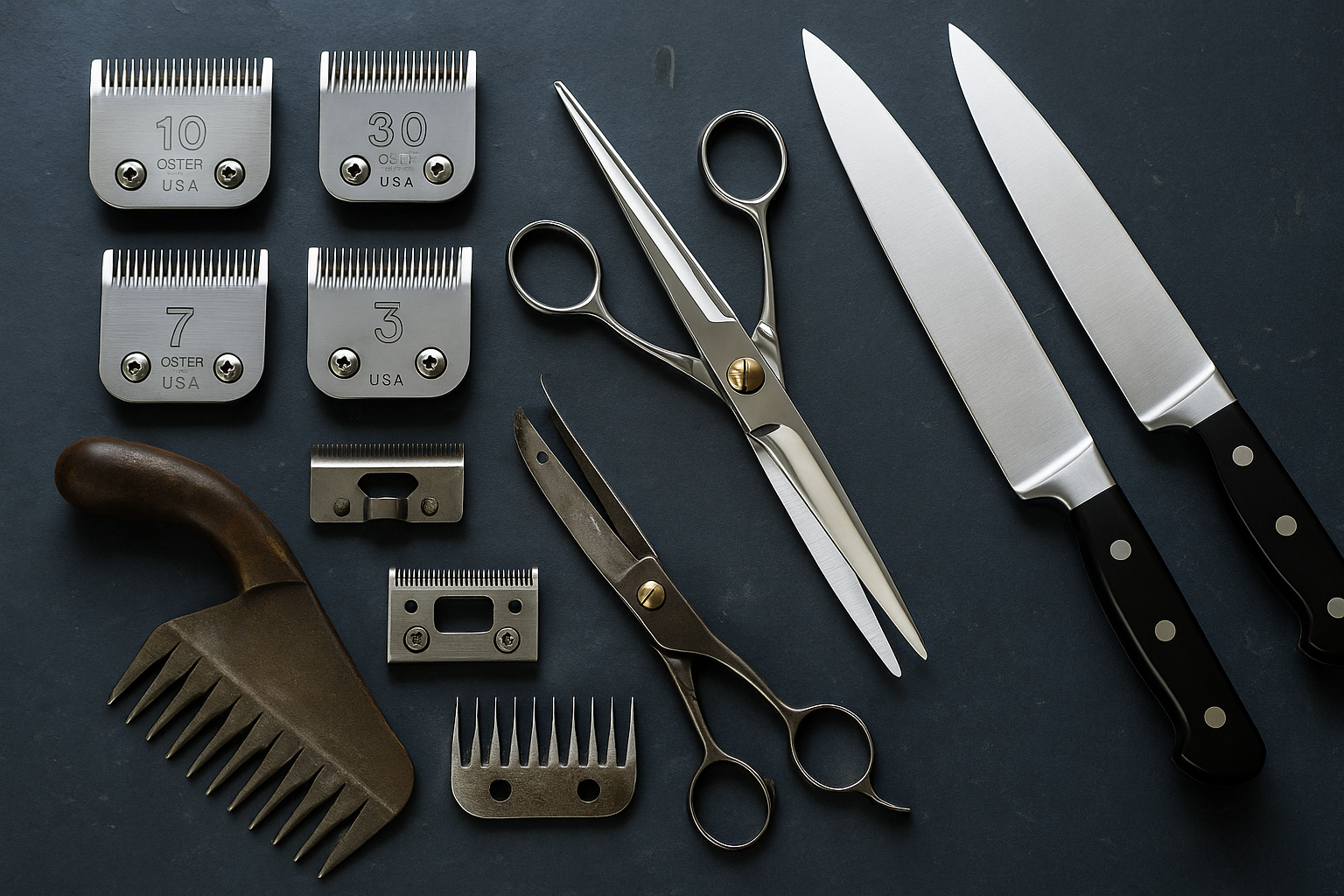
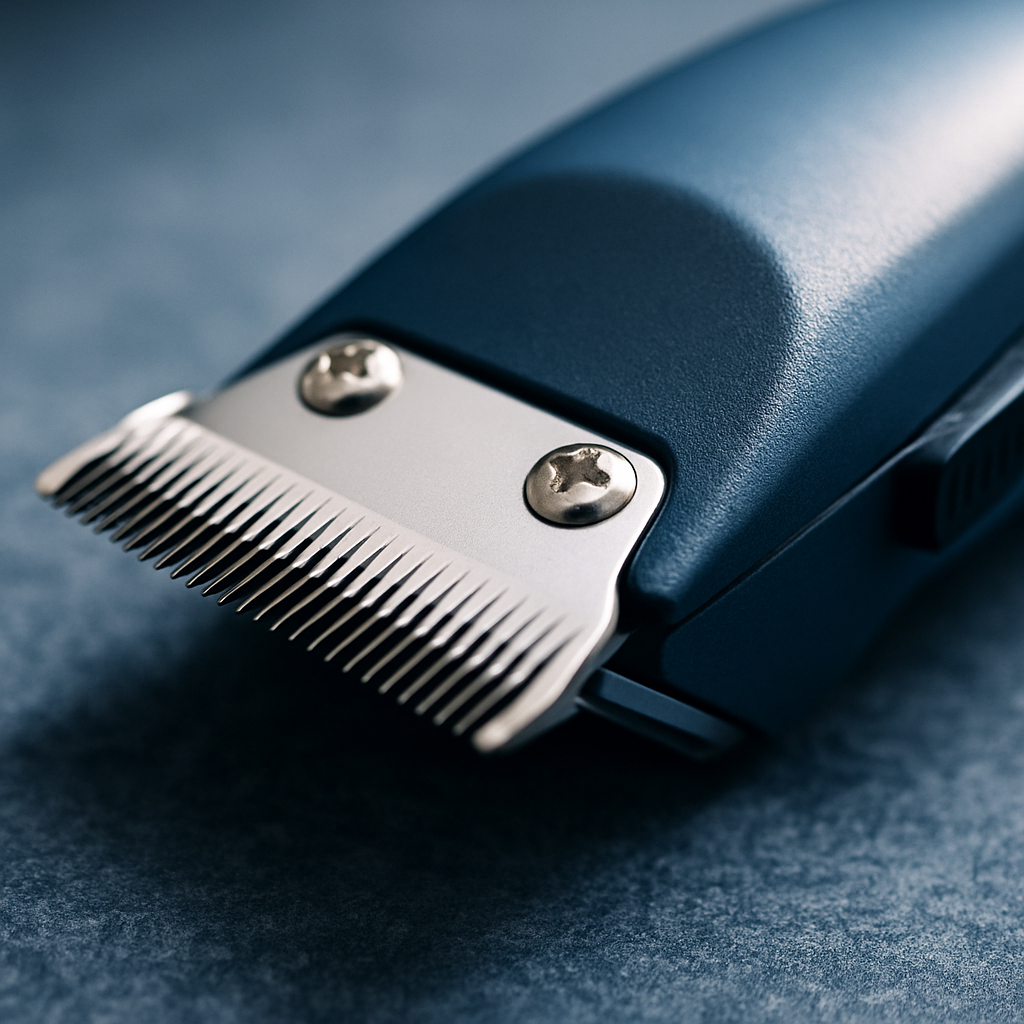
Hot clippers are the most common complaint we hear from working pet groomers and barbers in Australia. The blade gets too hot to touch within minutes. The dog flinches. The client jumps. You stop the cut, wait, repeat. Productivity dies.
Heat is not random. It is almost always one of five specific causes. Here is how to diagnose and fix each.
Cause 1: Build-up between the blades
This is the single most common cause and almost always the first thing to check. Hair, dander, dust, and old oil build up between the cutter and comb of a detachable clipper blade. The cutter cannot move freely. Friction increases. Heat builds.
The fix takes 90 seconds:
- Detach the blade
- Use a clean toothbrush or stiff brush to clear hair from the cutting surface
- Spray with blade wash (we use a citrus-based degreaser, but any clipper-specific blade wash works)
- Run the clipper for 5 to 10 seconds with the blade attached and the wash still wet
- Wipe clean
- Apply 3 to 5 drops of clipper oil along the cutting edge and behind the cutter
- Run for another 5 seconds to distribute
If your blade was hot because of build-up, this fixes it instantly. If it does not, move to cause 2.
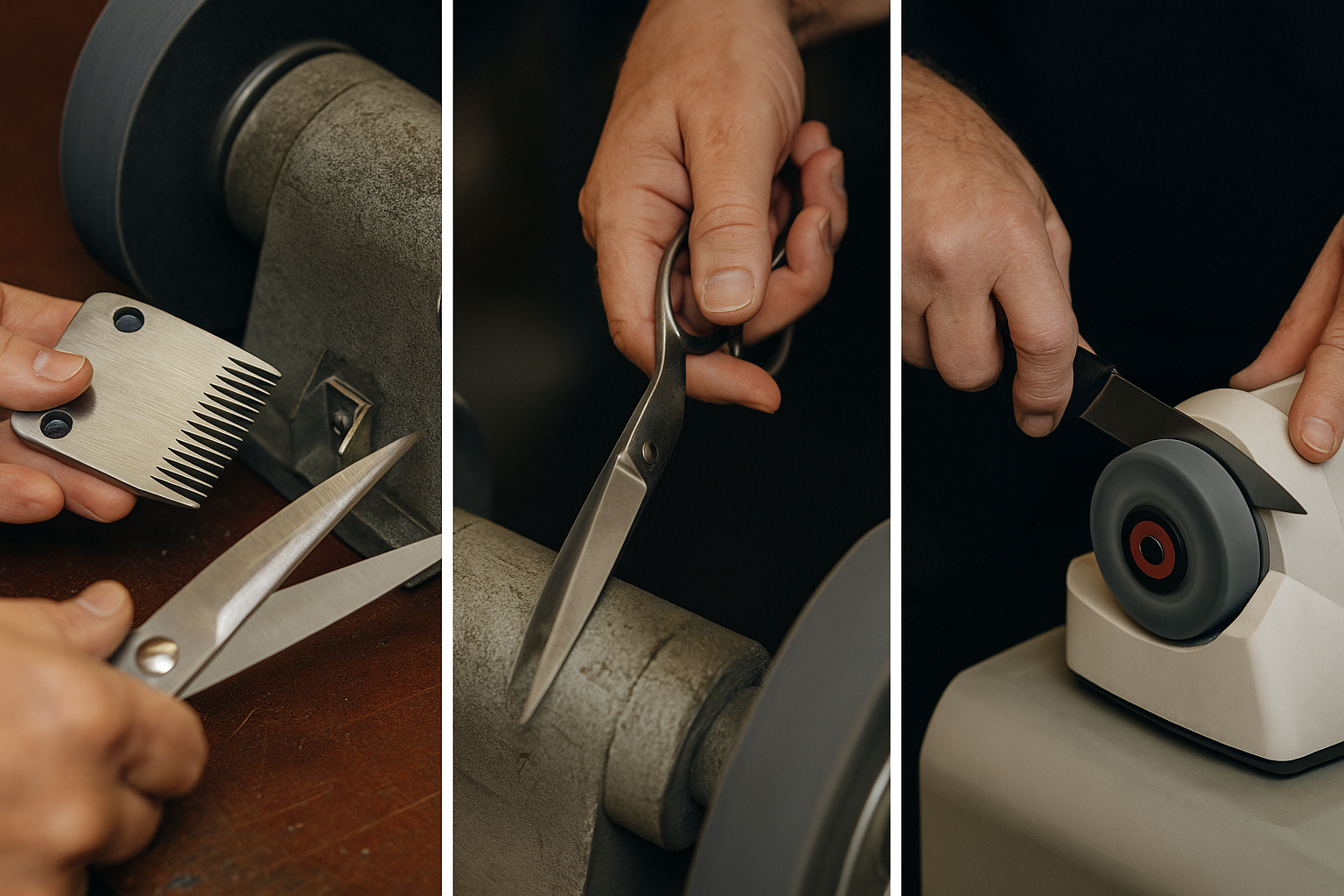
Cause 2: Dull blades
A dull blade pulls hair instead of cutting it. Pulling means friction. Friction means heat. The blade also takes more passes to do the job, and each pass adds more heat.
Signs your blade is dull and overheating because of it:
- You need 2 to 3 passes per area where 1 used to work
- The cut leaves visible lines or unevenness
- The dog flinches during cuts that used to be comfortable
- The blade gets hot fast even with fresh oil
- The blade does not hold an oil film (oil burns off in seconds)
The fix is sharpening, not more oil. A sharp blade with proper oil should run cool for 20 to 40 minutes of continuous cutting depending on coat type. If you cannot achieve that even after a clean and oil, the blade is dull.
Our clipper blade sharpening service handles all major brands at 5-7 day workshop turnaround. See our guide on sharpening frequency if you are not sure when to sharpen.
Cause 3: Blade tension wrong
Blade tension is the spring pressure that keeps the cutter against the comb. Too much tension creates excessive friction (heat). Too little tension means hair slips between the blades (also creates heat from inefficient cutting).
For most A5 blades, tension is fixed at the factory. For 5-in-1 adjustable blades and many barber clippers, tension can drift over time. Signs of wrong tension:
- Blade is hot but freshly cleaned and oiled
- Cutter visibly wobbles when you push on it
- You can hear a higher-pitched whine from the blade compared to when it was new
- The cut quality has degraded but the blade was recently sharpened
Tension adjustment requires opening the blade. Most groomers and barbers do not do this themselves. Send it in with your sharpening order and we will reset tension as part of the standard service.
Cause 4: Motor wear
If the clipper itself is hot (not just the blade), the motor is the suspect. Carbon brushes wear, bearings dry out, motor windings degrade. After 3 to 5 years of full-time use, even premium clippers start running warm.
Signs of motor wear vs blade heat:
- The body of the clipper is hot, not just the blade
- The motor sounds different (lower pitch, more vibration)
- The clipper struggles on dense coat where it used to fly through
- Battery clippers run shorter than they used to
- Cord clippers vibrate more than they used to
Motor service is a different trade. Most clippers can be serviced (brush replacement, bearing service) for $50 to $120 in Australia. After 5 to 7 years of professional use, replacement is often cheaper than service. Talk to your clipper supplier or the manufacturer for service options.
Cause 5: Wrong blade for the coat
Sometimes the blade is fine, the clipper is fine, the oil is fresh, and the heat is still happening. The blade is wrong for the coat.
A finish blade (#7F, #5F, #4F) on a thick, matted, or dirty coat will heat up fast because it cannot break through the coat efficiently. Use a skip tooth blade (#7, #5, #4) for the rough-out pass on heavy coats. The skip tooth design is engineered specifically to reduce heat on dense work.
Similarly, a #10 used for body work on a doodle will heat up faster than a #5F because the #10 is doing more cutting per pass. Use the right blade length for the coat length. See our blade numbers guide if you are unsure.
A sharp blade with proper oil should run cool for 20 to 40 minutes of continuous cutting. If yours can't, the blade is the problem, not the clipper.
The 30-second daily routine
If you do these three things at the end of every working day, you will prevent 80 percent of clipper heat issues:
- Brush coat off the blade
- Dip the cutting surface in blade wash for 5 seconds, then run the clipper to clear it
- Apply 3 drops of oil and run for 10 seconds
That is it. 30 seconds, every day, for the working life of your clippers.
The weekly routine
- Disassemble each blade. Remove the cutter, clean both surfaces, oil, reassemble.
- Inspect for chips or damage
- Check tension on adjustable blades
- Wipe down the clipper body. Clean vent slots with a small brush.
- Spray clipper case interior with mild disinfectant (yes, the case matters)
When heat means it is time to sharpen
If you have cleaned, oiled, and verified the blade is correct for the coat, and the blade still runs hot within 5 minutes of work, the blade is dull. No amount of oil fixes a dull blade. The friction is in the cutting itself.
Send it in for sharpening. Our workshop turnaround is 5-7 business days. Most groomers and barbers send batches every 4 to 8 weeks and never run a hot blade.
For instant pricing, place an order online, or read our full clipper blade sharpening service for what the process looks like.