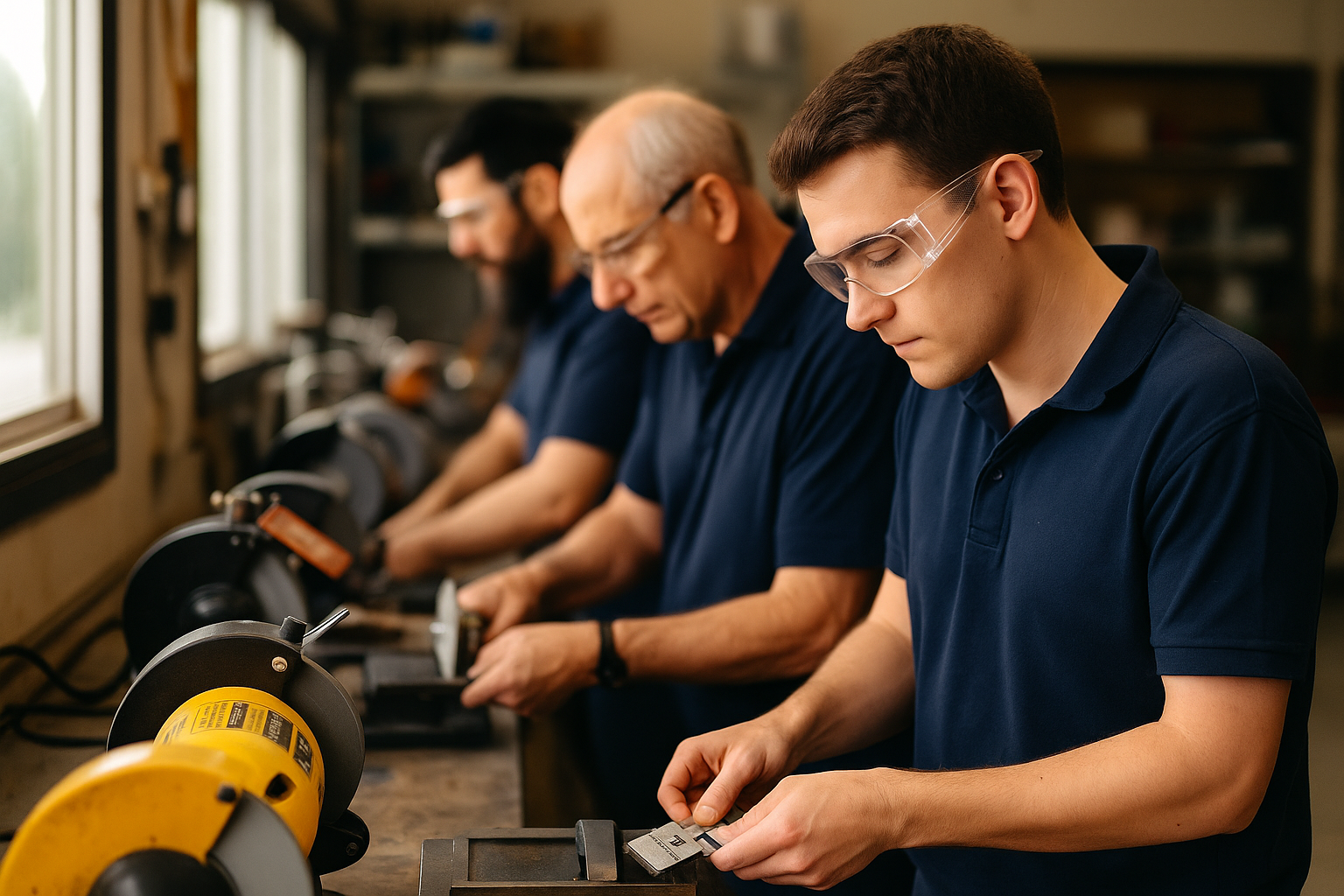
If you have ever Googled "scissor sharpening near me" in Australia, you have probably noticed prices vary wildly. One sharpener charges $15. Another quotes $90. Same scissors. Different planet.
This guide gives you real 2026 numbers for every kind of scissor sharpening in Australia, what those prices include, and why the cheap quotes are usually a red flag.
Quick price summary
Here are typical Australian prices in 2026 for professional sharpening done correctly:
- Hairdressing scissors (beveled / German edge): $40 to $65
- Hairdressing scissors (convex / Japanese edge): $75 to $110
- Thinning shears and texturisers: $35 to $50
- Pet grooming straights and curves: $25 to $40
- Pet grooming chunkers and thinners: $30 to $45
- Fabric / dressmaking scissors: $18 to $30
- Kitchen shears: $15 to $25
- Pinking shears: most sharpeners decline these (specialist work)
For our current pricing on every type of scissor sharpening service we offer, see the dedicated pricing pages.
Why convex scissors cost more
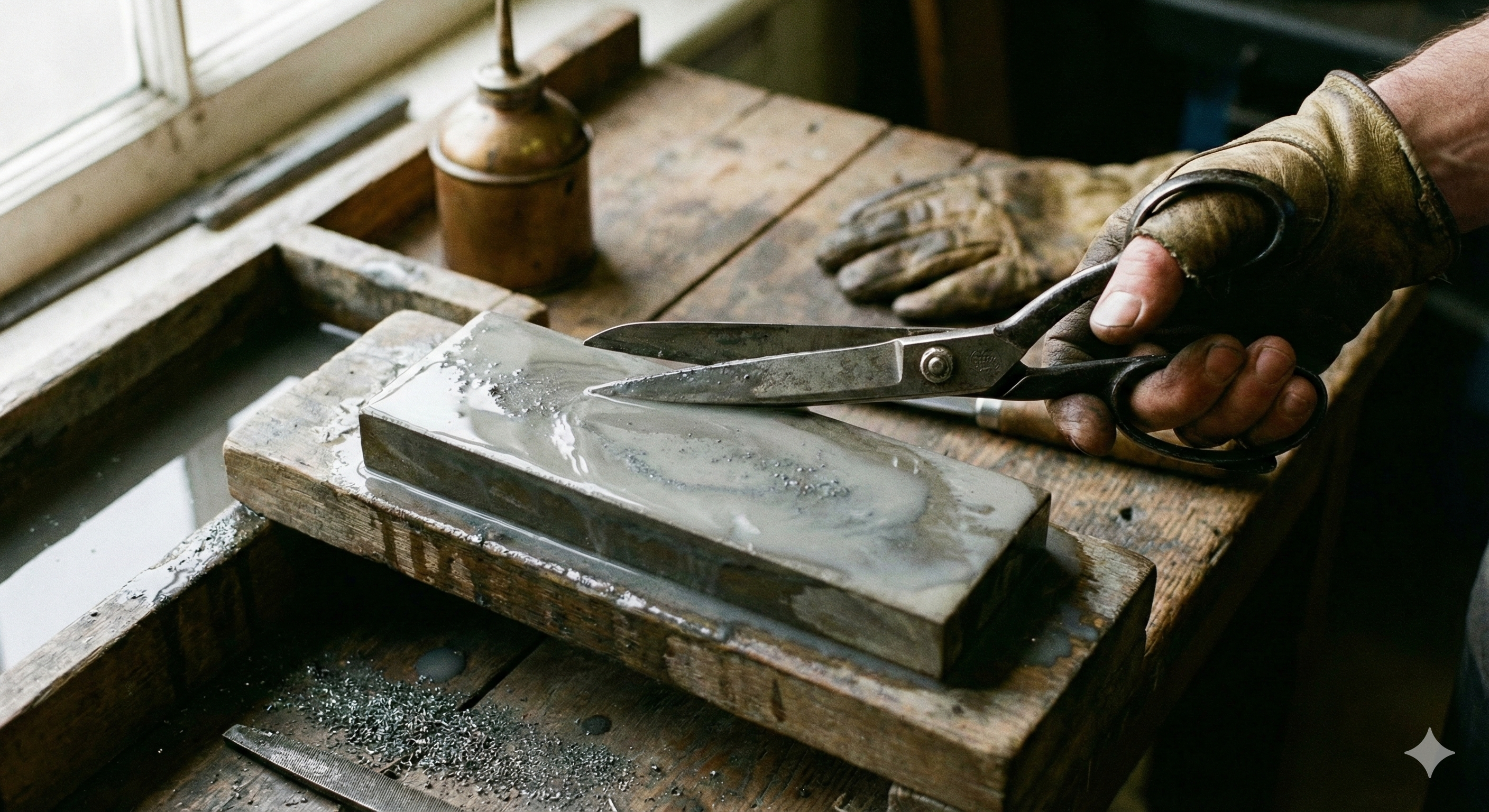
Beveled edges (the German style) have a flat angle ground into the blade. They sharpen on standard equipment in a few minutes. Convex edges (the Japanese style, called hamaguri) have a smooth curved taper to the cutting edge. There is no flat angle, just a gradual curve.
Sharpening a convex edge correctly requires dedicated convex equipment, hand finishing, and significantly more time per scissor. If a sharpener charges you $30 for convex shears, they are almost certainly using a flat wheel, which destroys the convex geometry and turns your premium scissors into cheap bevels permanently.
This is why the price gap exists. Read our full guide on convex vs beveled scissors if you are not sure which edge type you have.
If a sharpener charges you $30 for convex shears, they are almost certainly using a flat wheel. Your scissors come back damaged but you don't notice for weeks.
What "cheap" sharpening actually costs you
The genuinely cheap quotes (under $20 for hairdressing scissors, under $15 for grooming shears) almost always mean one of these:
- A flat grinding wheel used on every scissor regardless of edge type
- No tension adjustment after sharpening
- No tip alignment check
- No nick or chip repair (your scissors come back sharp but still skipping)
- A factory-trained operator replaced by minimum wage
We have repaired hundreds of scissors that arrived after a "cheap sharpen" elsewhere. Sometimes the damage is fixable. Sometimes it is not. Either way, you have paid twice and lost a tool.
What you should expect for the price
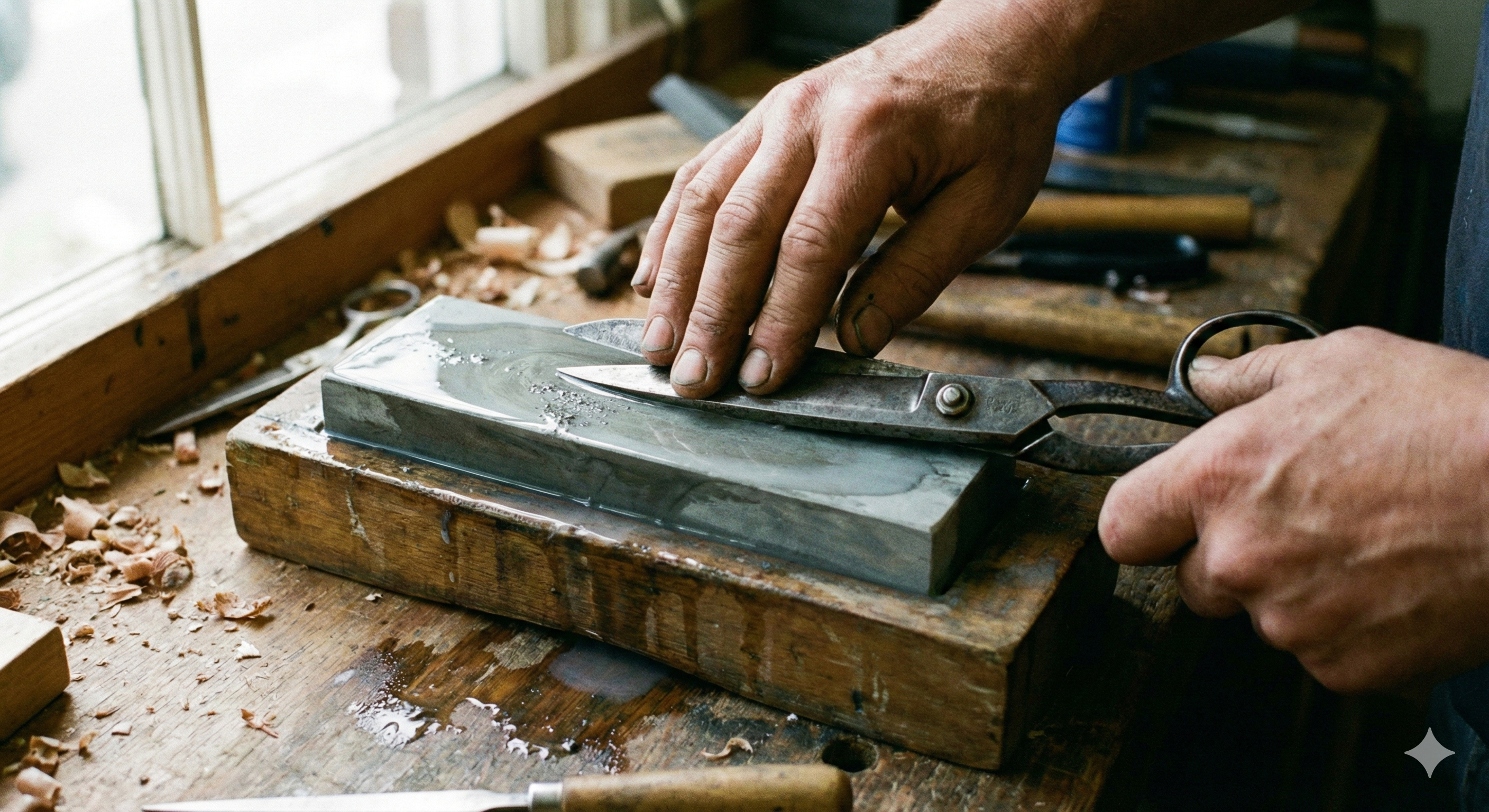
For the prices listed above on a professional sharpen, you should get:
- The original edge geometry preserved (flat or convex, as appropriate)
- Minor nicks and chips removed during the standard sharpen at no extra charge
- Tension reset and tip alignment checked
- Pivot cleaned and oiled
- A test cut on hair, paper, or fabric to verify cutting performance
- Honest assessment if your scissors need additional repair work
The cost question is the wrong question. The right question is what your time is worth, and how much faster you work with sharp tools versus blunt ones.
How often does it pay for itself?
A working hairdresser doing 6 to 10 clients a day will easily get 4 to 8 months out of a quality sharpen. Spread $85 across 6 months, that is roughly $14 a month for tools that cut cleanly, do not pull, and do not give you wrist fatigue. Most stylists report that their cutting speed increases by 10 to 20 percent in the first week after a proper sharpen.
A pet groomer doing high-volume doodle work might sharpen every 8 to 12 weeks. At $30 per shear and a working pair plus a backup, that is around $20 to $30 a month for the tools that pay your rent.
The cost question is the wrong question. The right question is what your time is worth, and how much faster you work with sharp tools versus blunt ones.
What about postage?
Mail-in sharpening is the standard service model in regional Australia and increasingly in capital cities. Most professional sharpeners (us included) include free Express Post return on orders over $100. You pay for the trip in. Most customers post a few sets together, hit the $100 threshold, and the return leg is free.
From Sydney, Melbourne, or Brisbane, Express Post arrives in 1 to 2 business days each way. Workshop turnaround is typically 5 to 7 business days. You can be sharp again within two weeks.
The bottom line
Scissor sharpening in Australia in 2026 should cost between $20 and $110 depending on the edge type and complexity. Anything cheaper is suspicious, especially for premium scissors. Anything more expensive is unjustified for standard shears.
If you are not sure what you have or what to expect, send us a photo through the contact form and we will tell you the edge type, what it should cost, and what to look for. No quote pressure, just a straight answer.
Or if you are ready to send your scissors in, place an order online for instant pricing across the entire range.