Buying your first set of professional hairdressing scissors is one of the bigger decisions early in a career. Cheap scissors slow you down, hurt your hand, and need replacing within months. Premium scissors fit your hand, cut cleanly, and last decades if cared for. The difference is real.
Here is how to choose well, what to spend, and what to avoid.
Edge type: convex or beveled
The first decision is the edge type. Beveled edges have a flat angle ground onto the blade. Convex edges have a smooth, curved hamaguri taper with no flat angle. They are different tools for different jobs.
Beveled scissors are typically cheaper, hold up to rough use, and cut more aggressively. They suit barbering, dry cutting, and anyone learning who is still developing finesse. Most German-made shears (Jaguar, Tondeo) are beveled.
Convex scissors glide through wet hair and produce cleaner, quieter cuts. They suit precision cutting, slice work, and refined styling. Most Japanese-made shears (Mizutani, Kasho, Joewell, Yasaka, Hikari) are convex.
If you do not know which is which, read our full convex vs beveled guide before buying. The edge type also affects sharpening cost and where you can have them sharpened. Convex shears need specialist convex sharpening, which costs more but is essential to preserve the geometry.
Blade length
Hairdressing scissor length is measured in inches. Common sizes:
- 4.5": Detail work, fringe trimming, point cutting near the face. Often kept as a secondary scissor.
- 5": All-purpose for stylists with smaller hands. Versatile for most cutting work.
- 5.5": The most popular length for working stylists. Balances control and reach.
- 6": Better for over-comb work, men's cutting, and stylists with larger hands.
- 7" and 7.5": Specialised for longer hair, blunt cutting, and barbering.
If you are buying your first pair, 5.5 inches is the safe default. You can always add a smaller detail scissor and a longer cutting scissor as your kit grows.
Handle style
Handle style affects fatigue, hand health, and cutting motion. The four common types:
- Opposing grip (level handles): The traditional handle. Both finger holes are at the same height. Best for traditional palm-down cutting.
- Offset: The thumb hole is slightly forward of the finger hole. More natural for most modern cutting positions. Reduces wrist strain.
- Crane: An aggressive offset where the thumb hole is significantly forward and angled. Allows the thumb to operate in a more relaxed position. Excellent for ergonomic concerns.
- Swivel: The thumb ring rotates independently. Can reduce wrist strain dramatically but takes practice to master.
If you have any wrist or shoulder issues, or if you cut for 6+ hours a day, an offset or crane handle is a serious investment in your career longevity. Try them before buying if at all possible.
Steel grade
The steel matters more than the brand marketing usually admits. Common professional steels in Australia in 2026:
- 440C stainless: Entry to mid-range. Holds an edge reasonably, sharpens easily.
- VG-10: Premium Japanese steel. Excellent edge retention, takes a fine edge, common on Kasho and Joewell premium lines.
- ATS-314 / ATS-55: High-carbon stainless used by Mizutani and other Japanese makers. Hard, holds an edge, rewards careful sharpening.
- Cobalt alloys: Premium tier. Used in flagship scissors. Extremely hard, very long edge life, but expensive to manufacture and replace.
For your first scissor, 440C is fine. The difference between 440C and VG-10 is noticeable but not life-changing for a developing stylist. Save the cobalt scissor for when you know exactly how you cut.
If you cut hair for the next 20 years, your wrists matter. The extra cost of an offset or crane handle pays back in career longevity.
What to spend
Australian hairdressing scissor prices in 2026 break into clear tiers:
- $80 to $200: Entry-level professional. 440C steel, beveled edge, basic handle. Will do the job for the first year. Examples: Tondeo Mythos, Jaguar Pre-Style.
- $200 to $500: Mid-range. Better steel, often offset or crane handle, beveled or convex edge. Most working stylists land here. Examples: Joewell Z, Kasho Silver, Yasaka SM.
- $500 to $1,200: Premium. VG-10 or ATS steel, convex edge, refined ergonomics. The scissor you keep for a decade. Examples: Mizutani, Kasho Black Star, Hikari Premium.
- $1,200+: Flagship and signature. Cobalt steels, hand-finished, often custom. For experienced stylists who know what they want.
For your first pair, somewhere between $250 and $500 is sensible. Cheaper than that and you will replace them quickly. More expensive and you risk falling out of love with a $900 scissor that does not suit your style.
What to avoid
Three mistakes new stylists commonly make:
- Buying online without trying. Scissors are intensely personal. The same brand and model fits one stylist's hand perfectly and feels wrong in another's. Try before you commit if possible.
- Skipping the offset handle. If you will cut hair for the next 20 years, your wrists matter. The extra cost of an offset or crane handle pays back in career longevity.
- Ignoring sharpening cost. A $900 convex scissor needs $85 sharpening every 6 to 12 months. Budget for it. If you cannot afford to maintain a premium scissor, do not buy one.
Caring for your investment
Once you have chosen, the difference between a 5-year scissor and a 25-year scissor comes down to care:
- Wipe and oil after every client
- Never drop them, ever
- Never cut anything but hair (no paper, fabric, or thread)
- Store in a hard case, not loose in a drawer or bag
- Sharpen professionally every 6 to 12 months depending on your volume
- Adjust tension regularly (if your scissors are dropping but not pulling, they need tension before they need sharpening)
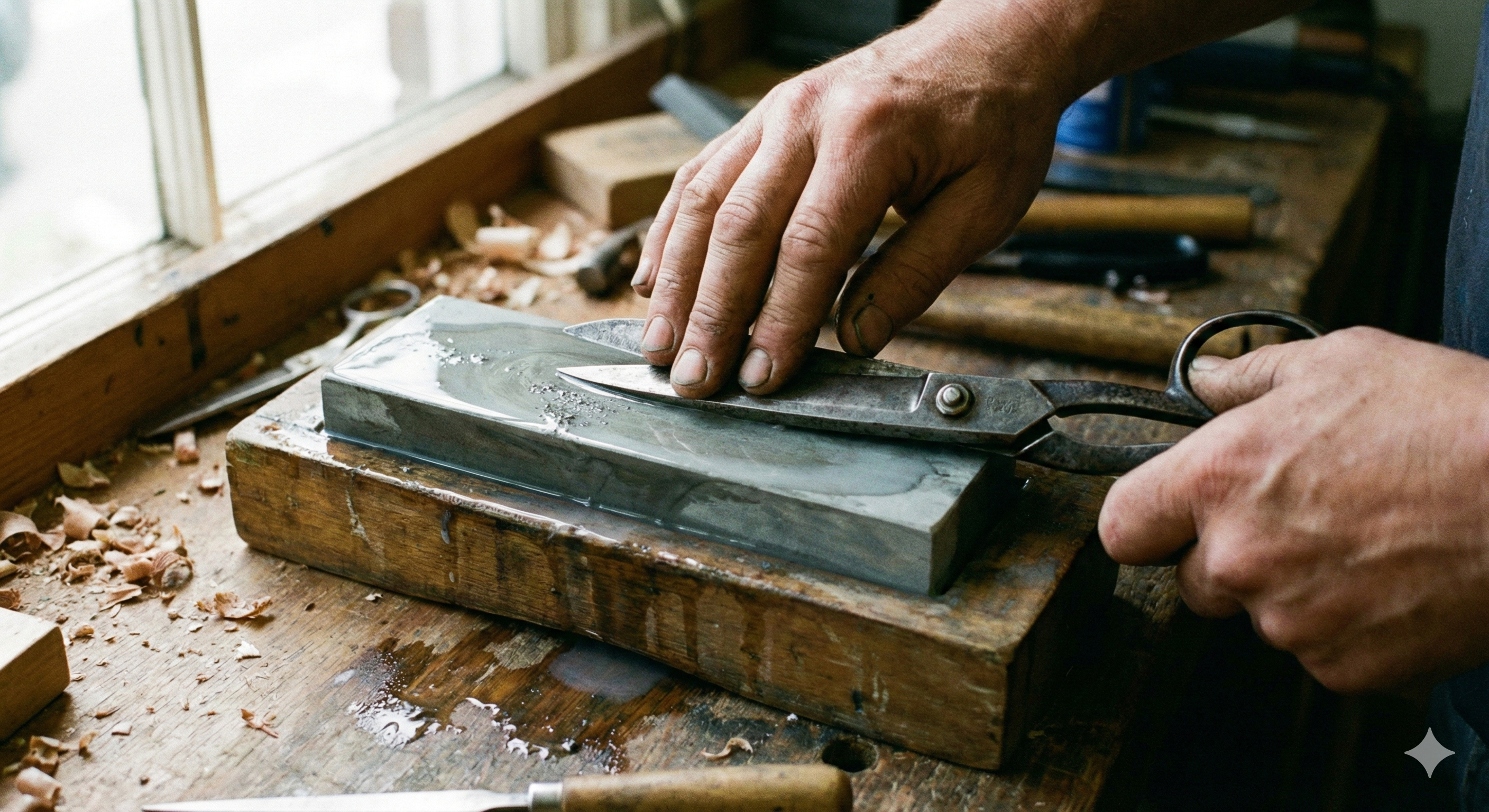
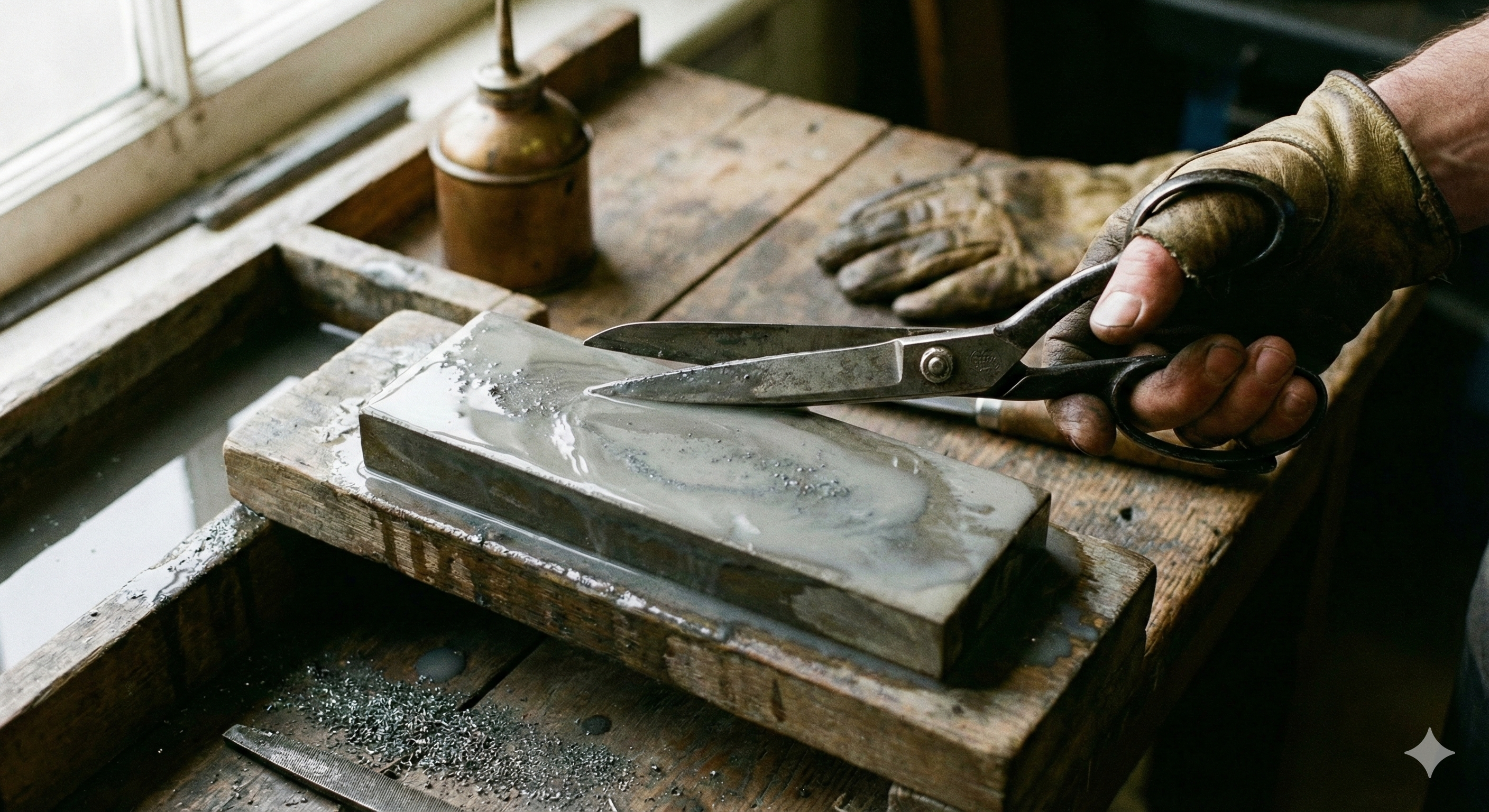
When the time comes for sharpening, our hairdressing scissor sharpening service handles both convex and beveled edges, all major brands, with the original geometry preserved. Workshop turnaround is 5-7 business days from when your shears arrive in Gunning, NSW.
If you would like a recommendation for your first scissor based on the kind of cutting you do, drop us a line through the contact form. After 30 years of sharpening hairdresser shears, we have a fair idea what works.